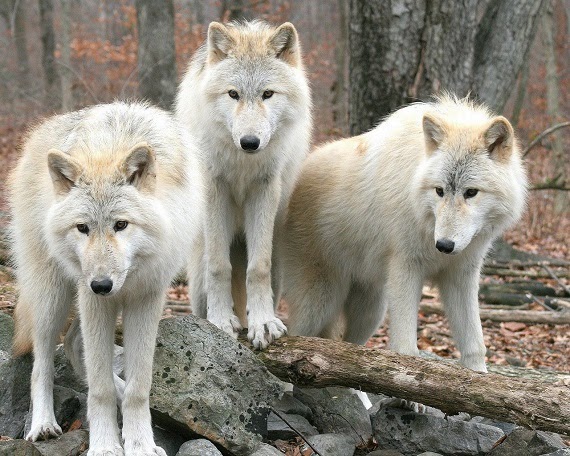
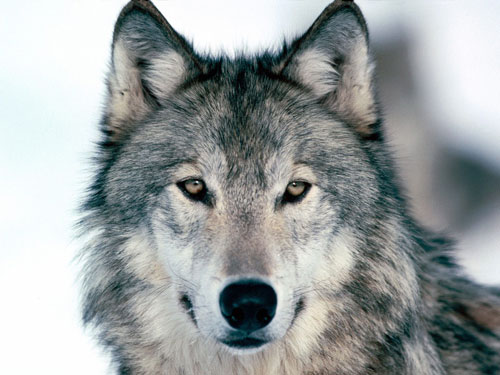
Latest Animal :
Recent Animals
Showing posts with label wolves. Show all posts

Wolves Play Important Role in Yellowstone Park Ecology

In nature, taking away one detail from the natural ecology of an area can shift the balance of the whole ecosystem. This is what happened when the wolves that naturally roam the Yellowstone National Park in Wyoming United States, were taken out. However, when the wolves were re-introduced after 70 years of absence, the ecology in Yellowstone dramatically changed.


Since the wolves were not around, the population of deer began to grow out of control. Although human intervention was already used to regulate the deer population, it still wasn’t enough. They had grazed a huge amount of the park’s vegetation. In 1995, wolves were taken to the park and this changed the behaviors of the deer. They then started to avoid certain areas in the park like valleys and gorges which in turn, helped the vegetation to re-grow. In a span of less than a decade, the trees became taller, bare spots of lands became forest of willow, aspen and cottonwood which attracted other animals.


The regrowth of the vegetation triggered other species to come back and repopulate faster such as beavers and wild birds. Population of other animals in the park like bears started to become larger, mainly because of the availability of food.


This amazing effect is called the trophic cascade. This is an ecological process that begins on the top of the food chain and affects everything below it. Re-introducing the wolves gave the park a chance to regenerate and give life and homes to hundreds of species of animals and plants. 
{[['']]}

Wolves Changed Yellowstone Park Ecology

In nature, taking away one detail from the natural ecology of an area can shift the balance of the whole ecosystem. This is what happened when the wolves that naturally roam the Yellowstone National Park in Wyoming United States, were taken out. However, when the wolves were re-introduced after 70 years of absence, the ecology in Yellowstone dramatically changed.


Since the wolves were not around, the population of deer began to grow out of control. Although human intervention was already used to regulate the deer population, it still wasn’t enough. They had grazed a huge amount of the park’s vegetation. In 1995, wolves were taken to the park and this changed the behaviors of the deer. They then started to avoid certain areas in the park like valleys and gorges which in turn, helped the vegetation to re-grow. In a span of less than a decade, the trees became taller, bare spots of lands became forest of willow, aspen and cottonwood which attracted other animals.


The regrowth of the vegetation triggered other species to come back and repopulate faster such as beavers and wild birds. Population of other animals in the park like bears started to become larger, mainly because of the availability of food.


This amazing effect is called the trophic cascade. This is an ecological process that begins on the top of the food chain and affects everything below it. Re-introducing the wolves gave the park a chance to regenerate and give life and homes to hundreds of species of animals and plants. 
{[['']]}

1st-Century Roots of 'Little Red Riding Hood' Found

The oldest big cat fossils ever found - from a previously unknown species "similar to a snow leopard" - have been unearthed in the Himalayas.
red riding hood
The skull fragments of the newly-named Panthera blytheae have been dated between 4.1 and 5.95 million years old.

Source: Here
{[['']]}

Do "Kid Cages" Really Protect Children From Wolves?

In rural Reserve, New Mexico, children wait for school buses inside boxy, wood-and-mesh structures that look like chicken coops. The "kid cages" are meant as protection from wolves. But are they even necessary?
wolves
The issue is part of a long-simmering political debate, which recently came to a boil in the Southwest when the U.S. Fish and Wildlife Service said it wants the Endangered Species Act to cover about 75 Mexican wolves in New Mexico and Arizona. That would make it illegal to kill these wolves—a smaller subspecies of gray wolf—and expand the area where they can roam safely.

Source: Here
{[['']]}
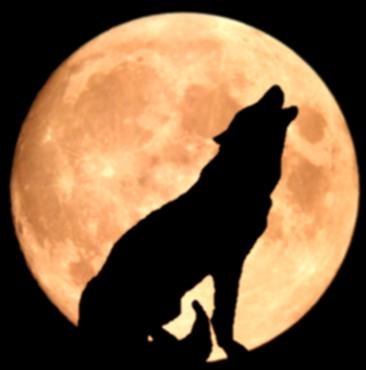
Wolves’ Howling Linked To Social Structure, According To New Research Findings

Wolves have long been a source of fascination among humans for their complicated social structures, but new research into their howling may help to unlock some of the nuances in social behavior within packs.

Wolves’ Howling Linked To Social Structure, According To New Research Findings

A new study conducted by international researchers suggests that wolf howling is more a signifier of high level emotional bonds between wolves than of emotional stress, as many researchers previously believed.

Source: Here


{[['']]}

More Wolf Facts


Wolves, in the past, have been typically regarded as villainous creatures, depicted as the “bad guys” in countless fairy tales and stories.

From the big bad wolf in Little Red Riding Hood to the huffing and puffing wolf in The Three Little Pigs, the status of the wolf as a bad guy has changed over the years, with movies like Balto: Wolf Quest, released in 2002, making wolves as the good guys this time around.
Wolf
As members of the animal kingdom, wolves are known to have their own share of distinct and unique personalities, and given their genetic ties with the domestic dog, these wolf characteristics are typically banded with their homestead-based cousins.

However, though the two species do share similarities, they are actually quite different from each other.

For one, wolves are instinctively tuned for wide spaces, which means that keeping them as pets is not as feasible as one would imagine, particularly in a urban closed-quartered habitat. Cases of wolves being raised as domestic pets are known to exist, but such successful cases are known to take place in farm or open-space habitats, ones which allow wolves to roam free without any of the risks of vehicle traffic or wolves encountering people from time to time when they are prowling about.

Another wolf trait would be in their natural inclinations to form packs or groups, with packs typically populated by six to ten wolf members. Typically, a wolf pack could cover spaces as large as 20 kilometers or 12 miles per day, a trait that falls in line with the wolf’s need for wide spaces.

Wolves are also known to have only one mate for life, and in such situations, a wolf pack leader, a male, and his mate are the only members of the pack who are actually “allowed” to mate. The wolf cubs born in packs are typically taken care of by every individual member, as and new members of the group are born, they eventually break out from packs to form their own as they grow older.

Incredibly intelligent and highly organized, wolves are loyal to their packs, committed in doing what they can in cooperatively surviving the harsh realities imposed on them by their habitats.

Far from being nature’s natural villains, the wolf’s standing as a bad guy has changed over the years, shedding some light on the truth of just how amazing and wonderful they are as creatures.
{[['']]}

Real Wolves at Twilight Premiere


Edward Cullen and Bella Swan should better be careful next time around since PETA lashed at them while partying with wolves. Yes, not men in wolves clothing but real wolves to create a more monstrous and wild impact to mark the last film premier of the movie, “Twilight”.

It was not Edward and Bella’s fault though since party planners just want the guests to have a taste and feel of the real thing. Since they could not find vampires, these four-legged wolves may be the best performing act of the night.
Real Wolves at Twilight Premiere
The three wolves that were in a safely enclosed cage nearing the entrance wowed the guests and some were in aghast. The presence of the wolves brought the party to the max but there were people who were not at all pleased, their spirit not lifted up a bit! Animal rights organization PETA which stands for

People for the Ethical Treatment of Animals has this to say on the presence of the wolves at the Twilight premiere through Yahoo News, “Didn't it dawn on the 'Twilight' event organizers that real wolves do not belong at a party with blaring music and flashing lights?"

"The wolves were provided by Hollywood Animals, a notorious exhibitor that has been cited for numerous violations of the Animal Welfare Act for repeatedly failing to provide the animals it exploits with basic veterinary care, proper shelter, food, and water," the statement continued. "We hope the rest of the promotional events surrounding 'Breaking Dawn' celebrates the brilliant work of the cast and crew and shows enough respect for wildlife to leave animals out of it.”

To all producers and party planners out there, there is a lesson to learn. In the light of the observance and respect to animal rights, it is best to keep animals away from the limelight especially when animals from the wild are concerned.couldn't find any, and the team doesn't know how long
Real Wolves at Twilight Premiere
Wolves Video
 
{[['']]}

The Grey Wolf


The grey wolf, though far from being animals symbolizing Christmas, plays different roles in Christmas-themed stories and movies, typically depicted as villains of different plots and sub-plots.

The direct-to-video feature, Beauty and the Beast: The Enchanted Christmas, released in 1997, featured grey wolves as pivotal character-plot elements, with the movie revisiting a short time which took place within the original Beauty and the Beast story, in between the time the beast had saved Belle from a grey wolf attack.
Grey Wolves
Though grey wolves are far from being naturally villainous as Christmas movies and stories would depict them, their notoriety for being pack hunters have made them “convenient” in successfully establishing a certain mood or feel.

Known for their efficient and effective hunting tactics, grey wolves are known for being the biggest of the wolf species, bearing similar physical characteristics of sled dogs and German Shepherds.

With physiques built to withstand the cold winds of winter, the coats of grey wolves are predominantly grey hued, though variations of deeper shades of grey are known to come up once in a while.

As a species, they are the most well documented and most well researched of wolf types, wit countless stories and myths revolving around them. Considered to be the ancestors of the domestic dog, research would prove that they were first domesticated in the Middle East, with grey wolves known to be found in different parts of North America, Eurasia and in the northern areas of Africa.

Cunning, their characteristics have made them perfect as “villainous” animals, but their status as villains is actually no different than other predatory mammals, only that their pack hunting tendencies make them truly dark creatures who implement strategies in catching their prey.
Grey Wolf

baby Grey Wolf

Grey Wolf

Grey Wolf

Grey Wolf
 Grey Wolf Video
 
{[['']]}

Timber Wolf


Timber wolves, as a wolf classification, have long been misunderstood, thought of by many as a particular wolf type or wolf species.

Featured in the 1987 classic Benji the Hunted, the name timber wolf actually refers to a general classification of wolves, not a specific wolf species. As an antagonist in the story, the timber wolf’s tenacious attitude towards prey was highlighted in the movie. Though not exactly a species with a bone to pick with domestic animals, the depiction of a timber wolf in Benji the Hunted can be described as exaggerated, but not entirely inaccurate.
Timber Wolf
As a wolf classification, the timber wolf name applies to what is known by taxonomists as subspecies of Canis lupus or the “common wolf”, along with wolf species belonging to the “grey wolf” classification, specifically those which inhabit forested areas.

With forests being their native habitats, the origin of the timber wolf’s name is quite easy to pinpoint and figure out. Generally, timber wolves are grayish in their hue, with their physical attributes very similar with that of German Shepherds. Their thick fur affords them extra warmth during winter, as their strength and speed allows them with the capacity to hunt for prey larger than them.

Being wolves, timber wolves are social animals, running in packs.

Though their capacity for domestication remains to be challenging, certain breeders have successfully bred timber wolf hybrids, resulting to pups which are not as liable to go wild as their wild ancestors are.

Closely related to coyotes, the timber wolf is not classified as an endangered species, with its conservation status pegged to be a “Least Concern”. Found in parts of Asia and North America, timber wolves continue to stand as icons of steadfast strength, with different sporting teams and organizations ascribing timber wolves as their mascots or “animal totems”.
Timber Wolf

Timber Wolf

Timber Wolf

Timber Wolf
Timber Wolf Video
 
{[['']]}

Gray Wolf


Getting lost in the wilderness can be a scary experience, after all, it can be very easy to end up in life threatening situations, such as being stalked by wild animals, such as wolves. This is the gist behind the movie, The Grey, released in 2012. The movie stars Liam Neeson, who protects Alaskan oil workers from wolves. As the workers head home for a two-week vacation, their plane dives into a vicious show storm which causes it to crash somewhere in Alaska’s wilderness. Here, the eight surviving oil workers need to survive the wild and find a way back to civilization. They encounter many obstacles, such as finding food and shelter, and fighting off a pack of gray wolves.
Gray Wolf
Although gray wolves are commonly portrayed as man-eaters in movies, these wild animals are actually shy of people, preferring to escape instead of engaging men. These dogs are commonly found in the forest of Eurasia, North America and North Africa. They are the largest amongst all species of wolves and once faced near extinction because of over poaching. They are prized for their fur, which is used to make clothing in cold areas. The gray wolf now occupies a small portion of their former dwelling grounds because of man encroachment and widespread destruction of their natural habitat.

Many of our domestic dog breeds originated from the gray wolf. These big canines communicate using body posture, barks, growls and their famous howls, which can be heard from many miles away. Like all types of wolves, the gray wolf has a keen sense of smell and hearing, helping them track down their prey’s scent even if it has departed for many days.  Many people are afraid of these wild animals, but with proper education, wolves and humans can live together in peace.
 Gray Wolf Pictures
Gray Wolf picture
Gray Wolf  Picture
Gray Wolf image
 Gray Wolf images
Gray Wolf pictures
 Gray Wolf image
Gray Wolf
Gray Wolf  Video
{[['']]}

Big Dog Breeds Hairy

wolf wolve dog hound canine pooch canis bow-wow despicable fellow qen txakurra it gos pas pes hond koer aso koira chien can kutya hundur madra cane suns kelb pies perro mbwa kopek ci anjing srigala
Wolf walking in snow

wolf wolve dog hound canine pooch canis bow-wow despicable fellow qen txakurra it gos pas pes hond koer aso koira chien can kutya hundur madra cane suns kelb pies perro mbwa kopek ci anjing srigala
the origin of all dog breeds
read more Wolf

alaskan malamute dog hound canine pooch canis bow-wow despicable fellow qen txakurra it gos pas pes hond koer aso koira chien can kutya hundur madra cane suns kelb pies perro mbwa kopek ci anjing
Alaskan Malamute Pet Dog

alaskan malamute dog hound canine pooch canis bow-wow despicable fellow qen txakurra it gos pas pes hond koer aso koira chien can kutya hundur madra cane suns kelb pies perro mbwa kopek ci anjing

siberian husky dog hound canine pooch canis bow-wow despicable fellow qen txakurra it gos pas pes hond koer aso koira chien can kutya hundur madra cane suns kelb pies perro mbwa kopek ci anjing
Siberian Husky

siberian husky dog hound canine pooch canis bow-wow despicable fellow qen txakurra it gos pas pes hond koer aso koira chien can kutya hundur madra cane suns kelb pies perro mbwa kopek ci anjing
Siberian husky Pet Dog
german shepherd dog hound canine pooch canis bow-wow despicable fellow qen txakurra it gos pas pes hond koer aso koira chien can kutya hundur madra cane suns kelb pies perro mbwa kopek ci anjing
German Shepherd Pet Dog

german shepherd dog hound canine pooch canis bow-wow despicable fellow qen txakurra it gos pas pes hond koer aso koira chien can kutya hundur madra cane suns kelb pies perro mbwa kopek ci anjing

border collie dog hound canine pooch canis bow-wow despicable fellow qen txakurra it gos pas pes hond koer aso koira chien can kutya hundur madra cane suns kelb pies perro mbwa kopek ci anjing
Appearance Border Collie Dog

border collie dog hound canine pooch canis bow-wow despicable fellow qen txakurra it gos pas pes hond koer aso koira chien can kutya hundur madra cane suns kelb pies perro mbwa kopek ci anjing
{[['']]}

Howling Wolf

howl wolf wolve loup lup lobo varg byk vlk mbwa mwitu kurt hunt ulv vuk ujk wild huisdieren Haustiere husdjur animales domesticos wallpaper dog breeds wolfdog pets
Howl Wolf
Wolf howl is already a habit for him, howling wolf usually before and after the hunt, it is done to convey the alarm or to find each other during the storm or unfamiliar territory and to communicate at long distances. Howling consists of the fundamental frequency which may be located between 150 and 780 Hz, and consist of up to 12 tones harmonically related. pitch usually remain constant or vary smoothly, and can change direction as many as four or five times. Wolf from different geographic locations may howl in different modes; with European wolf howling far more protracted and melodious than the North American wolf, the howling that hard and has a strong emphasis on first syllable. They both understood each other, however, as North American wolf have been recorded in response to European-style howl made ​​by biologists.
Wolf howling is generally distinguished from a large dog. Male wolf voted through the octave, through a bass in with the emphasis on "O", while women produce nasal baritone modulated by pressure on the "U". Dogs almost never howled, while wolf howl over a year old resulted in a series of complaints such as dogs. Roaring used to calling friends pack to kill a long, smooth sound similar to the early cry of horned owl. When pursuing prey, they emit higher-pitched howl, vibrates on two notes. When approaching prey, they emit a combination of short bark and a howl. When the howling together, the wolf choir harmonize rather than in the same note, thus creating the illusion of there into a wolf more than there are actual. Lone wolf howling usually avoided in areas where other packages are present. Wolf howl in the weather did not respond to rain and when full.

howl wolf wolve loup lup lobo varg byk vlk mbwa mwitu kurt hunt ulv vuk ujk wild huisdieren Haustiere husdjur animales domesticos wallpaper dog breeds wolfdog pets
Howl Wolve Picture

howl wolf wolve loup lup lobo varg byk vlk mbwa mwitu kurt hunt ulv vuk ujk wild huisdieren Haustiere husdjur animales domesticos wallpaper dog breeds wolfdog pets  howl wolf wolve loup lup lobo varg byk vlk mbwa mwitu kurt hunt ulv vuk ujk wild huisdieren Haustiere husdjur animales domesticos wallpaper dog breeds wolfdog pets  howl wolf wolve loup lup lobo varg byk vlk mbwa mwitu kurt hunt ulv vuk ujk wild huisdieren Haustiere husdjur animales domesticos wallpaper dog breeds wolfdog pets
Howl Wolf
wild animal picture
Read more about Wolf
{[['']]}

Wolf Wild Animal

wolf dogs species variant breeds wild animal picture wolves
Wolf Picture
wolf in the middle of a snowy forest

wolf dogs species variant breeds wild animal picture wolveswolf dogs species variant breeds wild animal picture wolves
Roaring Wolf
habit peculiar of this breed

wolf dogs species variant breeds wild animal picture wolves
Wolf Picture

wolf dogs species variant breeds wild animal picture wolves
Wolf Dog

{[['']]}

Wolf

wolf wolve dog
Gray Wolf
Wolves (Canis lupus) are the largest (in terms of size) among the wild relatives of the domestic dog (Canis lupus familiaris). In fact, dogs are actually a kind of wolf—remember the movie Babe (1995) where the sheep called the Border Collie dog ‘wolf?’ Domestication and breeding have turned domestic wolves into different fantastic forms (breeds) indistinguishable from the wolf. Some dog breeds, like the Siberian Husky and the Alaskan Malamute, look like ‘designer’ wolves. Some people cross dogs and wolves to produce ‘wolfdogs.’

Dogs might be a type of wolf, but wolves are very different from dogs: For one, their fur are better insulators, like wolverine fur, with its ability to prevent ice from forming when one breathes on it. Another differences are sense of smell (weaker than most hunting dogs), eyesight (weaker, but powerful than that of most dogs during night time) and hearing (imagine being able to clearly hear the sound of falling autumn leaves). They also have a distinct bone and teeth structure apart from dogs. In terms of behavior, wolves successfully pass behavioral tests dogs routinely fail.

Wolves used to have the most widespread territory among the canines until humans came along.

Size and Weight

Wolves are larger than most dogs, but they tend to be bigger at higher latitudes following Bergmann’s Rule. They can reach 80 to 85 cm (2.62-2.79 ft) tall, and 105-160 cm (3.44-5.25 ft) long; the tail being ⅔ the length of the head and body combined. Wolves are heavier in Europe (up to 38.5 kg or 85 lb), followed by North America (up to 36 kg or 79 lb), India/Arabia (25 kg or 55 lb) and North Africa (13 kg or 29 lb), with females weighing less.

Types of wolves

Strictly speaking there is only the grey wolf. Other wolves like the red wolf, Indian wolf, and Canadian wolf, are considered subspecies or—as currently debated for the red wolf—hybrids with other canine subspecies. The different subspecies are considered to have developed their distinctive forms as local adaptations.

The most distinct differences among groups of wolves are in color—ranging from pure white, to offwhite to browns, reds, grays to pure black; the latter occurring whenever a wolf also has dog in its parentage.


wolf wolve gray white black species dog hybrid
Black Wolf

As previously mentioned, a black wolf is a melano gray wolf. Genetic research from Stanford University School of Medicine and the University of California, Los Angeles (UCLA) revealed that black wolves owe their distinctive color to mutations that occur through the wolf-dog hybrid.

wolf wolve gray white black species dog hybrid
Wolfdog

As the name implies, wolfdogs (aka, ‘wolf-dog hybrids’ or ‘wolf hybrids’) result from the mating of various subspecies of wolves and dogs (which, itself, is a wolf subspecies). They may result from accidental matings or controlled breedings by an industry catering to people who want to buy ‘exotic’ pets or to effect certain desirable traits—say, for military purposes. To qualify as a wolfdog, your dog must have a wolf parent within the last five generations. In controlled crosses, ‘wolf-looking’ dogs (like Siberian Huskies, Alaskan Malamutes and German Shepherds) are generally used to mate with the Gray Wolf parent.

wolf wolve gray white black species dog hybrid
Snow Wolf

wolf wolve gray white black species dog hybrid
Gray Wolf

wolf wolve gray white black species dog hybrid
Wolves

wolf wolve gray white black species dog hybrid
Beautiful Wolf

wolf wolve gray white black species dog hybrid
Wolf Roaring
{[['']]}
 
Copyright © Animals Library - All Rights Reserved
Proudly powered by Blogger