Most people are scared of animals like lizards and geckos. However, some of us absolutely adore these creepy crawlers. Others even keep them as pets. Taking care of a gecko isn’t as hard as it sounds like. Here are a few pointers on how you can take care of them as a pet.
First, you need to make sure you get your gecko from a good pet shop or a certified gecko breeder. You want to get a healthy, disease-free gecko. You can also get them online, just make sure the site you get them is reliable.
Get a 10 to 20 gallon aquarium that has a safe screen lid. Geckos can still climb the glass, so make sure you keep the aquarium covered at all times. Never place sand at the bottom of their aquarium, this can actually end up getting into their stomachs which stays and hardens there. Instead, use reptile carpet, paper towel, cabinet liners, tile, or slate tiles. Place a reptile shelter like a rock cave or log inside as well.
Since geckos originally live in areas with warmer temperatures, you’d need to place a heat pad under their aquariums to keep a steady, warm temperature.
Keep your geckos well fed with meal worms, roaches, wax worms and crickets. Before you give these bugs to the gecko, dust them with calcium and vitamin D powder to help keep their bones healthy. Don’t leave the crickets hopping around the aquarium since they can bite your gecko. Also, leave clean water for swimming/drinking. You should also mist the inside of the aquarium with water every other day to keep it moist.
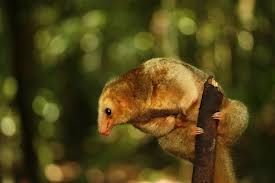
Among the living anteaters that are existent today, the Silky Anteater is the smallest one there is of its kind. Also known as pygmy anteater (Cyclopes didactylus), the Silky anteater is a species of anteater found in South America as well as in Central America.
The Silky Anteater is different from the species where it belongs because it has rather a proportionately shorter face and larger cranium compared to the others. Most adult anteaters are quite long having a length measurement that ranges from 360-450 millimeters, approximately 14 to 18 inches long.
They have thick and quite dense, soft brown fur but sometimes they also have grey to yellowish color with a silvery gleam on it. Although many subspecies have generally darker fur, often with some appearance of brownish streaks and much lighter somewhere on the limbs and under parts, what is interesting to note is that their eyes are generally black and the soles of the feet are red.
The scientific name Cyclopes Didactylus actually means “two-toed circle-foot” which basically means the presence of two claws on the forefeet. Another innate feature a Silky Anteater has is, they have the ability to encircle a branch, twig or tree to which it is carefully clinging. The fourth toe, on the other hand is quite small and does not have claws while the other two toes are absent or cannot be visibly seen. The hind feet have four toes with exactly the same length, each toe having long claws and an invisible hallux.
Most Silky Anteaters are found in Mexico, Central America, Ecuador, Brazil, Peru and Bolivia. Some are also seen in the parts of eastern Brazil and the island of Trinidad. According to Wikipedia, there are seven recognized subspecies:
• Cyclopes didactylusdidactylus, Linnaeus, 1758 - the Guyanas, eastern Venezuela, Trinidad, Atlantic Forest • Cyclopes didactyluscatellus, Thomas, 1928 - northern Bolivia, southeastern Peru, western Brazil • Cyclopes didactylusdorsalis, Gray, 1865 - extreme southern Mexico, Central America, northern Colombia • Cyclopes didactyluseva, Thomas, 1902 - western Ecuador, southwestern Colombia • Cyclopes didactylusida, Thomas, 1900 - western Brazil, eastern Ecuador and Peru • Cyclopes didactylusmelini, Lönnberg, 1928 - northern Brazil, eastern Colombia • Cyclopes didactylusmexicanus, Hollister, 1914 - southern Mexico
As “woodland critters” raccoons are perhaps the most iconic, typically found prowling in the wild as well as finding their way in to suburban, real estate developments.
The 1969 Disney live-action feature entitled Rascal focused on the story of a child meeting up with a baby raccoon, engaging on fun-filled adventures with the little tyke.
Given their cute and cuddly looks, one would think that animal lovers would keep them as pets, but as the facts would prove, they are not the best pet options to have in homes and households.
Below are some facts about the raccoon, with reasons which justify their un-ideal standing as pets as well as some fascinating facts about them.
Parasites – Raccoons are known to carry different diseases, with raccoon roundworms – a microscopic parasite – being the most notorious.
As a threat to the health and well being of humans, this parasite is known to cause blindness and even death, something which any homeowner wouldn’t want to risk by brining a wild or stray raccoon into his or her home.
Cat-like Abilities – Though not exactly related to cats, raccoons are known to have cat-like abilities, with their ability to easily land from 35 to 40 feet heights.
Unlike cats though, raccoons have a “tactile” sense, which is defined by their human-like forepaws which they can use to accomplish all sorts of tasks such as foraging for food. Also, unlike cats, a raccoon’s tail takes up as much as 52% of its overall length, measuring as long as 405mm.
16-Year Lifespans – Raccoons are known to live as long as 16 years in the wild, but the longest living raccoon is reported to have lived as long as 21 years in captivity.
Swimming – Just as they are well-built for land-based terrains, raccoons are also adept swimmers.
However, they are not exactly fond of swimming, since their fur isn’t “waterproof” in the sense that their wet fur tends to add more weight.
Lemurs are typically mistaken to be monkeys, but this assumption doesn’t define them as such, in the sense that the lemurs are not descendants of ancient primates, even if they do bear certain similarities with them.
Found in the island of Madagascar, the 2005 animated hit Madagascar doesn’t miss on its Madagascar-based premise, a credit to the movie’s creators.
Telling the story of how a group of New York Zoo animals managed to find themselves in the island of Madagascar, the adventures of Alex the lion, Marty the zebra, Melman the Giraffe, and Gloria the hippo are the main focus in Madagascar, where the four encounter a group of merry lemurs who are simply out to live the “good island life”.
Though not exactly responsible for sparking interests on lemurs, the movie did manage to stoke the fires of interest in them, effectively putting lemurs on the map.
As creatures, all types of lemurs share a set of basal primal traits, characterized by tails and divergent digits found in their hands and feet. Highly social and very interactive, these characteristics have once made them popular as exotic pets, but their status as a pet is well guarded by officially sanctioned wildlife conservation agencies.
The fact that they were quite popular as pets has actually driven different organizations into officially monitoring and controlling lemur populations, giving focus on emphasis on how properly housed they are, how pet owners are in the capacity to provide them with their dietary staples, etc.
Though it is not generally illegal to keep lemurs as pets, there are certain considerations and restrictions involved in keeping them, something which someone who is entertaining the thought of getting a lemur should be well aware of.
Do you own a lemur? What did you have to do to legally keep it?
Squirrels, with their bushy tails and cute ears, are part of the Sciuridae family of small and medium-sized rodents, often described to be one of the cutest creatures found in the wild.
In 1957, Walt Disney Studios released a feature entitled Perri, which focused on the life of squirrels as perceived through the experiences of Perri, a female squirrel. The feature explored the different natural predators and enemies known to squirrels, as it also looked into the courtship rituals and processes known to happen when young male and female squirrels meet.
As creatures of the wild, the squirrel’s cuteness factor is quite well established, leading many to think that the prospect of keeping them as household pets is feasible.
However, though keeping squirrels as pets is possible, domesticating them in the sense that squirrels can be trained by anyone to be at home in the house isn’t comparably ideal against keeping other domestic pets like cats or dogs.
As cute as they are, squirrels are actually not easy to domesticate, and while they do bear significant cuteness factors, they are also known to carry certain diseases and viruses like rabies.
Though there are cases when squirrels do manage to adjust well in homes and with households, the condition can’t really be considered as common. With most squirrels more inclined to roam free – not to be caged in – discouraged “pet” squirrel owners have confessed certain frustrations in how their “courtship” with squirrels are going.
Doubtless, squirrels do bear certain physical traits which attract people to them, planting the idea of keeping them as pets. But as real life has its own terms on how Mother Nature’s creatures’ have their own personalities and traits, the squirrel remains to be more inclined for the great outdoors, rather than be kept as a family pet.
These are small and nocturnal creatures that are found in Southeast Asia, belonging to one group among eight species of Strepsirrhini (sub-order) primates. The slow loris with scientific name (Nycticebus) is a primate genus closely related to the lemur. Using their distinctive face masks or markings, scientists are able to slowly determine the kind or species. Some have unique striking eye patches that extend below the chin area which surprisingly did not come from Borneo.
Because of these facemasks distinctions, it resulted into the identification of four other species of Bornean and Philippine Lorises namely Nycticebus Menagensis, Nycticebus Bancanus, Nycticebus Borneanus and Nycticebus Kayan.
Generally, slow rises have round heads, large eyes, and narrow snouts and have different coloration patterns that can be detected depending on the species where it belongs. Their trunk is long which gives them the ability to twist and turn and transfer from one tree branch to another while their arms and legs are almost the same length.
Most mammals do not have poison however slor lorises have a toxic bite which is kind of area to the species it belongs. The toxin that it produces comes from primarily licking a gland on their arm and the secretion mixes with its saliva to further boost its toxicity level. This is their way of protecting themselves from predators in the wild. On the other hand, while protecting their young, the toxin is spread over the fur while grooming so that no predators would be enticed to make the infant their meal.
Out of the 8 identified species, all five species are already considered as “endangered” or “vulnerable” due to habitat loss and wildlife trade. They often move slowly and discretely to keep predators away trying hard to keep quiet and usually freezes when threatened or attacked. They are known to eat small animals, insects, fruits and other vegetation making them omnivores.
When it comes to pet rats, rat breeds tend to be a confusing subject, with a number of exotic pet owners asking, What’s the rarest rat breed?
In jest, Remy, the gourmand-rat from the 2007 animated hit Ratatouille, would one truly rare pet rat, given Remy’s culinary capacities and capabilities. After all, who wouldn’t welcome a kitchen maestro into his or her home?
But jokes aside, to determine a “rare rat breed” is not as exactly like determining a rare dog or cat breed. What’s rare, as most exotic pet circles note about rats, is not exactly the “breed” of a rat, but rather its “type”.
A “show worthy” Siamese Rat, for example, is considered to be quite highly valued, even though Siamese Rats are considered to be commonly found in pet stores. As rats, a Siamese Rat is defined by a cream-hued coat with blue points or seal-hued points, generally looking just like how Siamese Cats look like.
Also, apart from bearing a Siamese Cat-like coat, Siamese Rats are known to have distinct eye colors, typically in shades of red or pink. When talking about rare Siamese Rats, black-eyed Siamese Rats are generally considered to be quite rare and hard to find, and when matched with a perfectly blended coat, they would be the perfect rat candidates for the “rare rat breed” distinction.
Also, just as black-eyed Siamese Rats are considered to be unique, black-eyed white rats are considered to be rare, with most white rats having red or pink-hued eyes.
Though not exactly breeds, the two types of rats mentioned above are among the few types of known rare rats.
Humans always share a special bond with animals, more so with primates because they are the closest to our kind. Its anatomy, physical make-up, characteristics and behavior undoubtedly is similar to ours. We are related in more ways than one, humans as Homosapiens coming from the family where monkeys, chimpanzees and apes belong.
Perhaps, this is the main reason why we are so intrigued to keep exotic pets most especially monkeys. One of the most sought after monkey to bring home as pet is the Squirrel Monkey. Also called the “Death Head Monkey”, they are yellowish orange in color with white ears and white throat, accentuated by a black mouth. These colors on specific body parts (coat, ears and throat) have earned them such moniker. These monkeys are usually found in the rainforest’s of Central America. Their average size reaches to about 25 to 35 centimeters with a tail of 35 to 42 cm, making its tail longer than its body. Unlike other monkeys, the Squirrel monkey’s tail is not used for climbing and hanging on a tree but rather on balancing and working its way around the rainforest.
A Squirrel monkey is a bit shy, quiet and do not seem to socialize but are active most of the day while they sleep profoundly at night. It hangs and thrives on trees most of the time, an arboreal special but occasionally stays on the ground. Its thighs are shorter compared to their lower legs making them more capable in jumping from one tree to another. Fruits, insects, spiders, frogs and small birds are their regular meals and are at time picky.
If you want to keep a squirrel monkey as a pet, be ready! Yes, they look so cute and adorable and may be mistaken to be cuddly pets, but they are actually wild animals and love to stay outdoors, in the forest where it belongs. Bringing it home takes great responsibility. You will need a big enclosure where it can jump around. Taking care of a Squirrel monkey demands some time and attention. Most monkeys are mischievous, you know, so this means having one is liking have a teenager at home with some qualms. One has to understand that having a Squirrel monkey is no joke. They are free and high spirited in the wild, so be ready to cope with their energies and unpredictable behavior.
Pot bellied pigs are truly misunderstood creatures, with almost everyone convinced that they’re simply eating machines that are only good at just that – eating.
But as different pet owners of pot bellied pigs would attest, these pigs are actually more than just constantly consuming eating machines, with their intelligence and capacity to adjust to moods being an established pot bellied pig trait.
The 2003 released Charlotte’s Web: Wilbur’s Great Adventure managed to focus on this pot bellied pig trait, through Wilbur’ the movie’s main character. Learning about the value of friendship from Charlotte the spider, the movie delves into the value of friendship, just as the original Charlotte’s Web storyline managed to successfully do so.
Though not as commonly kept as domestic pets like cats and dogs are, pot bellied pigs bear attributes which make them ideal as household pets. They are highly trainable and quite intelligent, as well as generally playful and quite interactive with people.
A pig sty may be classically described as smelly and unkempt, but the truth about pot bellied pigs is that they are actually clean creatures which are odor-free. The association of pigs with being dirty hails from the ascribed production-inclined conditions of pig stys, where pigs aren’t kept as pets, but rather as food commodities.
With an average lifespan somewhere between 12 to 18 years, pot bellied pigs, with all their attributes and characteristics, make for great domestic pets, even with their voracious appetites, a trait which remains to be true about pigs.
Their appetites may come as a downside for some pet owners, but as their intelligence and companionship traits would define them as great pets, true pet lovers can simply consider their diets as part of the pleasures of keeping a pet pot bellied pig.


 ']]}
']]}