Latest Animal :
Recent Animals
Showing posts with label exotic pet. Show all posts

Beware the Slow Loris


These are small and nocturnal creatures that are found in Southeast Asia, belonging to one group among eight species of Strepsirrhini (sub-order) primates. The slow loris with scientific name (Nycticebus) is a primate genus closely related to the lemur. Using their distinctive face masks or markings, scientists are able to slowly determine the kind or species. Some have unique striking eye patches that extend below the chin area which surprisingly did not come from Borneo.

Because of these facemasks distinctions, it resulted into the identification of four other species of Bornean and Philippine Lorises namely Nycticebus Menagensis, Nycticebus Bancanus, Nycticebus Borneanus and Nycticebus Kayan.
Slow Loris
Generally, slow rises have round heads, large eyes, and narrow snouts and have different coloration patterns that can be detected depending on the species where it belongs. Their trunk is long which gives them the ability to twist and turn and transfer from one tree branch to another while their arms and legs are almost the same length.

Most mammals do not have poison however slor lorises have a toxic bite which is kind of area to the species it belongs. The toxin that it produces comes from primarily licking a gland on their arm and the secretion mixes with its saliva to further boost its toxicity level. This is their way of protecting themselves from predators in the wild. On the other hand, while protecting their young, the toxin is spread over the fur while grooming so that no predators would be enticed to make the infant their meal.

Out of the 8 identified species, all five species are already considered as “endangered” or “vulnerable” due to habitat loss and wildlife trade. They often move slowly and discretely to keep predators away trying hard to keep quiet and usually freezes when threatened or attacked. They are known to eat small animals, insects, fruits and other vegetation making them omnivores.


Slow Loris Video
 
{[['']]}

Considering a Wallaby as a Pet


Why go to Australia to personally see a kangaroo when you can have a “miniature kangaroo” at your own homes? If you are searching for loving and affectionate, cute and cuddly pets you can always have a dog or a cat. However, if you want something unique, something uncommon in the neighborhood, then a wallaby can perfectly make a cute, cuddly pet without the barking, the digging and the meowing.

A Wallaby basically is a marsupial belonging to a group or category of animals called Macropods from any of about thirty species of the Macropodidae family. Kangaroos are popular type of marsupials with the main distinction of their infants being born small. They nourish themselves in their mother’s pouch for months until they are ready to explore and socialize.
Wallaby as a Pet
In the same way, wallabies crawl into their mother’s pouch right after they are born without fur and they usually stay for six to seven months in the pouch until they are fully furred and no longer needs the warmth of their mother. There are about 20 type of wallabies and the most commonly used as pets are the Bennett wallaby and the Damal wallaby, also called the Tammar Wallaby.

Between the two types, the Bennett Wallaby is usually chosen as pet because they are more docile and they have a mild temperament. A Bennett Wallaby grows to 2 ½ feet tall and usually weighs between 25 to 45 pounds and their life span reaches to about 12 to 15 years. Bennett Wallabies are diurnal, mostly active during the day and are known herbivores, eating mostly plants although there are available wallaby foods in the market intended for mature wallabies.

On the other hand, the Damal Wallaby or the Tammar Wallaby have the same size as the Bennett but are mostly nocturnal and loves to play during nighttime. This type is more jumpy, anxious and reacts to stimuli easily than the Bennett that is why most exotic pet handlers opt to have the Bennett Wallaby because of their nature and temperament.

Like any exotic pet, the wallaby is only for people that are essentially informed and ready to care for their pet. Before making the purchase, talk to a veterinarian who knows how to take care of wallabies and find time to research more about having a Wallaby as a pet. They are loving and affectionate but they could also be naughty and uncontrollable at times. Hence, it is important to be ready and able in terms of knowledge, space availability, enclosures, family rules, climate and even local state restrictions.

Many exotic pet lovers have wallabies in their homes as house pets. They are manageable and are easily toilet trained but a good amount of preparation is needed before finally deciding on having one.
Wallaby as a Pet

Wallaby as a Pet

Wallaby as a Pet

Wallaby as a Pet
Wallaby as a Pet Video
 
{[['']]}

Introducing: The Blue-Tongue Skink


Reptiles come in many forms and kinds. Name it… Turtle, tortoises, snakes, alligators, crocodiles and
lizards top the list. If you are considering a reptile as a pet, what should be the perfect one? What are
the criteria in making that choice? A selective process is important and you can do some pencil-pushing
before finally making that important decision.

If you want a reptile that is trainable with equally high intelligence than most reptiles, then there’s one
that suits the preference well enough. It is rare to have a smart and thinking reptilian form however
there is one that is considered the most intelligent. It comes from the lizard family, originating in
Australia, no other than the Blue Tongue Skink. Sometimes called Blue Tongued Skinks or Blue Tongues,
these lizards recognize voices and even distinguish their owners. Blue tongues can be potty-trained and
habitually deciphers feeding schedules.
Blue-Tongue Skink
The exciting feature of this intelligent reptile is its prominent large blue tongue that is intended to
intimidate and threaten potential enemies. For pet lovers and exotic pet aficionados, the blue tongue
itself is a come-on, an attractive stimulus that harnesses every exotic keeper’s passion for the unusual,
mysterious and exceptional.

Most Blue Tongue Skinks are diurnal, meaning they are active most of the day, the exact opposite of
nocturnal creatures. Blue Tongues are ground-forging omnivores that feed on a wide variety of insects,
flowers, berries and fruits.

Quite large and smart enough to interact as well as easy to maintain only requiring low maintenance
costs, this lizard is the best to have of its kind and lives long enough up to 20 years in the wild, and could
reach even up to 30 years when it is in captivity.

When it comes to having fun with it, Blue Tongues are great to have, enjoyable to bring around at
the park for people to see. You can’t help attracting a crowd just by the sight of it. These reptiles are
beautiful, tame and great for kids to handle and take care, of course with adult supervision.

Before buying a Blue Tongue, be prepared for it. Search for places and pet shops where you can
purchase it from and figure out its history. It is best advice to have a captive bred Blue Tongue rather
than getting one which came directly from the wild. Captive Bred means these lizards are born and
raised in captivity. Quality captive bred Blue Tongues are great pets to have because they are docile,
tame and friendly.
Blue-Tongue Skink

Blue-Tongue Skink

Blue-Tongue Skink

Blue-Tongue Skink
 Blue-Tongue Skink Video
 
{[['']]}

Rats and Amphibians


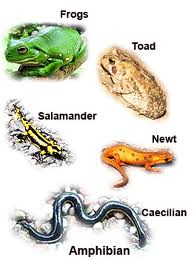
Rats and amphibians remain to be members of the exotic pet category, kept by a select group of persons who see them as interesting companions.

Pivotal in the storyline of the 2006 CGI feature Flushed Away, the voice talents of Hugh Jackman, Kate Winslet, Ian McKellen, Jean Reno and Bill Nighy gave life to a unique cast of creatures, creatures which most societies would classify as vermin – rats and toads.

Amphibians

Telling the tale of how a “high class” rat found his way into the real world where his kind is unwanted, Flushed Away looked into the similarities between rats and frogs, focusing on how they survive in a typical urban setting.

As pets, rats and amphibians like toads or frogs are far from being considered to be mainstay domestic pets, pegged to be part of the exotic pet variety. Typically housed by pet owners in enclosures, their respective upkeep generally requires pet owners to “remake” their natural habitats, giving them the necessary natural essentials they need to survive.

However, rats are somewhat more versatile with this habitat necessity than toads, with some pet rat owners allowing their wards to roam free around the house, only inhibiting them from going outside. Though this may sound like rats have one point over keeping amphibians as pets, a number of pet rat owners have confessed that letting a rat loose in the house isn’t exactly 100 % safe for the rat and the household.

As there is really nothing wrong with keeping rats and amphibians as pets, their unpopularity as standard domestic pets is defined by the company they keep, liable to be not as interactive as cats and dogs are.

Still, there are many out there who find them interesting pets to have, and even with the extra chores and pet keeping particulars which come with their keeping, lovers of rats and amphibians confess that they have no problems accommodating the needs of their opted exotic pets.

Amphibians

rat
Amphibians Pet Video
 
{[['']]}

Praying Mantis


Praying mantises are among the most popular types of insects, even taking a titular spot in the 1998 hit A Bug’s Life. Depicted to be a “mysterious showman” in the Disney-Pixar animated feature, praying mantises do actually embody degrees of mystery, though their study by entomologists can be described as extensive.

With the popularity of A Bug’s Life, the animated feature led many parents to exotic pet shops looking for pet praying mantises for their kids when the movie first came out.
Praying Mantis
Since 2012 is a long time from 1998, plus the fact that isn’t not really a good idea to want a pet just because it was featured in a movie, here are some praying mantis facts for you to peruse, before you take the time to look for a praying mantis to keep as a pet.

The Praying Mantis – A Quick Glance

There are different (over 2000) mantis species out in the world, with the African Praying Mantis being the most popular of praying mantis pet types, given their suitability for praying mantis pet keeper beginners.

Generally, praying mantises can live for as long as up to a year, though the specific life expectancy of a praying mantis is dependent on the type of species. Some praying mantis species only get to live for 6 months as adults, as there are species which live shorter adult life spans.

In terms of size, there are known praying mantis species which could grow as large as six inches, though those kept as pets are typically within two to three inches in size. They come in various colors too, again depending on the species, with some all green as others are typically brown like twigs.

In terms of keeping them, praying mantises should be kept in individual tanks since they are not always agreeable with the presence of another praying mantis in the vicinity. A large enough tank – roughly 12 inches x 12 inches – is good enough for an individual praying mantis. Tank temperatures are typically based on the particulars of a praying mantis specie, along with their dietary preferences, with some mantises particular with live meals (insects, mostly).

Though they don’t live that long, praying mantises are relatively easy to keep as pets, an interesting exotic insect to have in households and homes, if accepted by family members.
Praying Mantis picture

Praying Mantis

Praying Mantis

Praying Mantis pictures

{[['']]}

White Mice


White mice, in most cases, are the first types of mice which pop up when talking about mice as pets, leaving many to think that they’re the only types of mice worthy of keeping as pets.

The 1999 American animation/live action film Stuart Little, which was loosely based on a book by EB White, reinforced the “white mice pet” concept into the general population’s minds, leaving most thinking that with mice as pets, only white mice can be kept.
White Mice
As it turns out, there are other mice varieties which can be kept as pets, not just white mice. Here’s a quick take touching up on them.

Pet Mice – More than 40 Varieties

Just as with cat and/or dog circles, there are different breeds of mice, and as pets, there are actually “thorough-breeds” and mixed breed pet mice. As pets, these mice are quite popular, and have different attributes and breeding qualities compared to their “home-rodent” cousins.

Generally, “thorough-breeds” are classified as “exhibition quality mice”, typified by solid hued-coats of either pearl or sable, cinnamon or himalayan, silver or blue. In most pet circles, they are pegged as exotic pets, given that they are not commonly encountered types of mice.

When talking about more commonly encountered pet mice options, brown-coated mice are often described as “fancy mice” by most pet owners and pet stores, taking the name after “hobby”, as in “hobby mice” (hobby mice = fancy mice, get it?).

Field mice are typically associated with these mice, and while there are differences between them and Kangaroo Mice, most “fancy mice” are pegged together as one group defined by their brown hued coats.

In terms of temperament and better pet mice options, female mice – regardless of type – are often ascribed as better to have since female mice urine is not as pungent when compared to male mice urine.

Also, female mice are more toned down and calm, and keeping two together isn’t really all that a headache. Keeping two male mice together requires constant regulation from pet owners since male mice are liable to fight with each other regularly.

Do well in remembering that when it comes to pet mice, there are more varieties other than white mice. Smart and quirky, mice pets are quite fun to have, even if most consider them as vermin.

Do you consider them as vermin yourself? I don’t. Well, at least not the ones that live in hiding around my house at least. :)
 White Mice Pictures
White Mice

White Mice picture

White Mice image

White Mice pictures
White Mice Wallpapers
White Mice Video

{[['']]}

Deer


The 1942 Disney animated Bambi has done well in equating the Bambi namesake with deer, a classic example of how a proper noun, after being used as a household name in different homes based in different parts of the world, transforms into an accepted common noun proxy.

Originally based on a novel written by Felix Salten, the movie has done more than just give deer a new name, but has also spread the importance of environmental awareness, addressing the risks and dangers involved in unsettling Mother Nature’s ecologic balance.
Deer
Doe and deer have also earned significant time on the spotlight though the movie, with its popularity leaving many to wonder how feasible having a deer as a pet is.

The answer, of course, is not as clear cut as aspiring pet deer owners would want, considering that if they were all that easy to have as pets, they’d have been quite popular pet options since the Bambi movie’s release.

Deer as Pets – Not Easy, but Possible

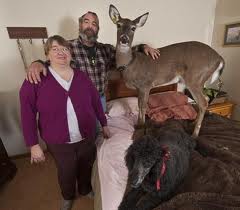
Keeping deer as pets is possible, but their care and maintenance won’t be easy for pet deer owners.

For one, space and enclosures with access to greens should be considered in their keeping, given that keeping them inside homes and domiciles aren’t suitable habitats for deer.

They may be quite sweet and “clingy” when raised from doe to adulthood, but they are also prone to bite people, depending on situations and circumstances, usually when their tempers are put to the test.

The thing about deer is that they are naturally inclined to only prowl within a specified radius, with a defined “home spot” in the middle of that said radius. This means that if one keeps deer in a ranch or fenced space, they’re not all that driven to jump out and never come back, but cases of deer-related injuries and accidents are known to exist in cases when deer-pets do escape from enclosures.

They also have the tendency to dig through enclosures/fences, so ensuring solid fence constructions is essential in keeping deer as pets.

All in all, they can be kept as pets, but with regards the cost, maintenance and upkeep involving their pet-status, having them around won’t be easy as having a dog or cat as a pet.

That said, would you still want one running around at home?
Deer  Pictures
Deer
Deer images
Deer picture
Deer image
Deer pets
Deer Picture
Deer pets
Deer Wallpapers
Deer Wallpapers
Deer Wallpaper
Deer Wallpapers
Deer Wallpaper
Deer Wallpapers
Deer Wallpaper
Deer Wallpapers
Deer Wallpaper
Deer Wallpaper
 Deer Video

{[['']]}

Too Close for Comfort


We all have that dream, where we get to casually hang out with Tigers, treating them as though they large scale versions of their domestic feline cousins.

But as we dream, we are all quite aware of how different Tigers are from domestic cats in the real world, with one swipe from them resulting to more than just a skin-deep scratch.

An undercover Human Society employee was also quite aware of this fact, upon discovering that workers of an Oklahoma-based wild animal park allowed children to come in close contact with some of its tigers.
Too Close for Comfort
Based on reports from USA Today, the said undercover representative of the Human Society saw the unsafe handling of wild animals in the GW Exotic Animal Park, Wynnewood, Oklahoma.

The organization has filed a number of complaints against the wild animal park, citing instances of animal abuse, and the unsafe security/safety practices implemented by the park, defined by how children were allowed to come close to its tiger cubs. The organization has also noted the death of five tiger cubs in the past, which if proven to be true, will leave the park with a lot to answer for.

GW Exotic Animal Park owner Joe Schreibvogel is convinced that the Humane Society is intent in creating noise, in an effort to generate more donations. Given that the park stands to be one of the largest of its kind (exotic-animal parks) in the United States, Schreibvogel claims that the park’s status makes it a target for organizations like the Human Society.

As investigations and inquiries are still ongoing, it is too soon to note if the park or the Humane Society are exactly in the wrong, but we’ll be featuring pertinent updates over here, once they come out.
Too Close for Comfort
 
Too Close for Comfort

Too Close for Comfort

Too Close for Comfort


{[['']]}
 
Copyright © Animals Library - All Rights Reserved
Proudly powered by Blogger