The species is one of the candidates under the federal conservation for the Endangered Species Act. At this time, there are only an estimated 18,000 in the bird's population. But just in December 2012, the population was at close to 45,000.
The conservation plan proposed that landowners work to manage their land properties via the advantage of the lesser prairie chicken, while given financial incentives. This plan was drafted in order to avoid the impact of land development via the chicken's habitat, including oil and gas digging, which can possibly be done through collecting fees and enrollments.
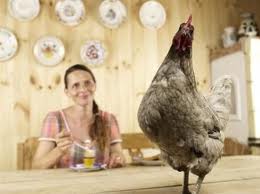
Generally, most people are familiar with chicken as a food commodity, NOT as domestic pets which kept as though they were cats or dogs.
But just because the status quo perceives chickens to simply be food doesn’t mean that there aren’t people who actually keep them as pets, with most of them quite informed about the quirks and particulars of chickens.
In 2005, Walt Disney released Chicken Little, an animated CGI feature that put chickens on the spotlight. Playing with the storyline of an old fable entitled “The Sky Is Falling”, the movie did manage to highlight some facts about chickens, and in tune with the movie’s touching up on chicken facts below are some more unique factoids about chickens.
Chicken Facts
In terms of numbers, chickens actually outnumber the number of human beings in the world. In China alone, there is an estimated 3 billion chickens, which says a lot about their total population number.
Chickens are known to have breeds too, just like dogs and cats. In terms of breed numbers though, there are at least 200 types of chicken breeds and variations known to exist, including the rare and extinct varieties of chickens.
Oddly enough, the tyrannosaurus rex’s known closest living relative is said to be the chicken, considering the two creature’s bone similar structure. But unlike the carnivorous association pegged with the tyrannosaurus rex, chickens are omnivores, which means they eat either meats or vegetation.
In normal conditions, a chicken can live as long as 11 years in the wild. Due to the practice of confinement breeding of chickens in poultry houses, chickens raised for meat only live for as long as six weeks.
Also in their normal living conditions, chickens actually flock together, and aren’t solitary birds. A wild flock is known to implement a communal system in rearing chicks, as well as taking turns in keeping eggs warm.
It is no secret that chickens are often kept for their economic value as food products or commodities, but as the signs of the times would prove, there has been a significant increase of people keeping chickens as pets, standing to make a difference in the reasons why people keep chickens.
As the 2000 released CGI animated feature Chicken Run managed to depict the typical “production-inclined” care and keeping of chickens, the truth behind having chickens as pets is not as demanding as keeping them for food is, only requiring significant attention to the way pet chicken owners treat and take care of their pets.
Enclosures and ample spaces
A chicken coop remains to be a basic must-have for pet chickens, standing as the habitat where they sleep and lay their eggs, if hens are being talked about. Ideally, a chicken coop should provide pet chickens ample space to wander about, as well as properly fence them from going beyond its boundaries.
Cleanliness
When talking about poultry farms, cleanliness stands to be a priority. The same discipline towards cleanliness is also required with pet chickens, with regular chicken coop cleanups and even bathing standing as a pet chicken owner’s responsibility.
Veterinary Requirements
Though the average chicken isn’t liable to constantly get sick, it is still advisable for pet owners to have their chickens regularly checked, given the different risks they are exposed to while foraging for bugs or bits of food outdoors.
Ideally, pet chickens should be fed with proper diet menus too, something which a vet can provide to pet chicken owners.
Interaction
Ideally, pet chicken owners are required to spend significant time with their pet chickens, given how beneficial regular interaction with human beings can be for them.
Though far from being interactive as other interactive pets like cats and dogs, human interaction with pet chickens is known to make them more calm and collected, doing away with their “wild” instincts of running away when seeing a human being.
As pets, pet chickens are known to boast benefits to their masters. Their natural inclinations for small bugs and larvae makes them “organic pest control” methods for households, allowing pet chicken owners a “utility aspect” to be found in their pets.
Chickens being kept as pets have increasingly become popular in suburban and urban domestic zones, often kept for the chicken’s natural capacity to be in-house pest exterminators.
The 2000 animated comedy Chicken Run told the comedic tale of chickens who were intent in not becoming part of the poultry section of a grocery store, saying a lot about how smart chickens actually are, which in turn contributed to the rising popularity of chickens being kept as pets over the years.
Chickens as Pets – At a Glance
Contrary to most assumptions, chickens can be readily tamed via regular hand feeding regimen and proper handling, with most breeds generally docile by nature.
However, not all states in the US accept chickens being kept as family pets, mostly due to the early morning crowing of roosters, which is considered as form of noise disturbance to some.
Generally, states which allow pet chickens are also strict when it comes to regulations, with stipulations generally touching up on zoning rules, ideal habitat/environment conditions and health and sanitation conditions or considerations.
For example, restrictions pertaining to a pet chicken’s “space” are closely guarded, with most rules noting that they should not be allowed to just roam around wherever or whenever they want to.
Also, the ideal condition of a chicken coop is also monitored, and of course, the actual treatment of chickens kept as pets is one which a number of agencies are closely looking into, given the popularity of fighting cock gambling circles.
But as daunting as the “watchdogs” and regulations of pet chickens are, a number of pet owners confess that they aren’t really all that challenging to have as pets, even rewarding as companions for those who are comfortable being surrounded by feathered friends.
Bottom line, if you feel that having a pet chicken is more rewarding than having a pet cat, look into your state’s rules, and ascribe by them when you bring your first pet chicken home.
 The conservation plan proposed that landowners work to manage their land properties via the advantage of the lesser prairie chicken, while given financial incentives. This plan was drafted in order to avoid the impact of land development via the chicken's habitat, including oil and gas digging, which can possibly be done through collecting fees and enrollments.
 ']]}
']]}